
The FIFA World Cup is more than a showcase of football talent; it’s also a proving ground for cutting‑edge ball technology. Since Adidas became the tournament’s official ball supplier in 1970, each edition has introduced innovations in materials, panel shapes and aerodynamics to enhance performance.
Below is a ranking of the ten most significant World Cup match balls, ordered from tenth to first according to their impact on the game, their engineering advancements and their overall reception.
10. Jabulani (South Africa 2010)
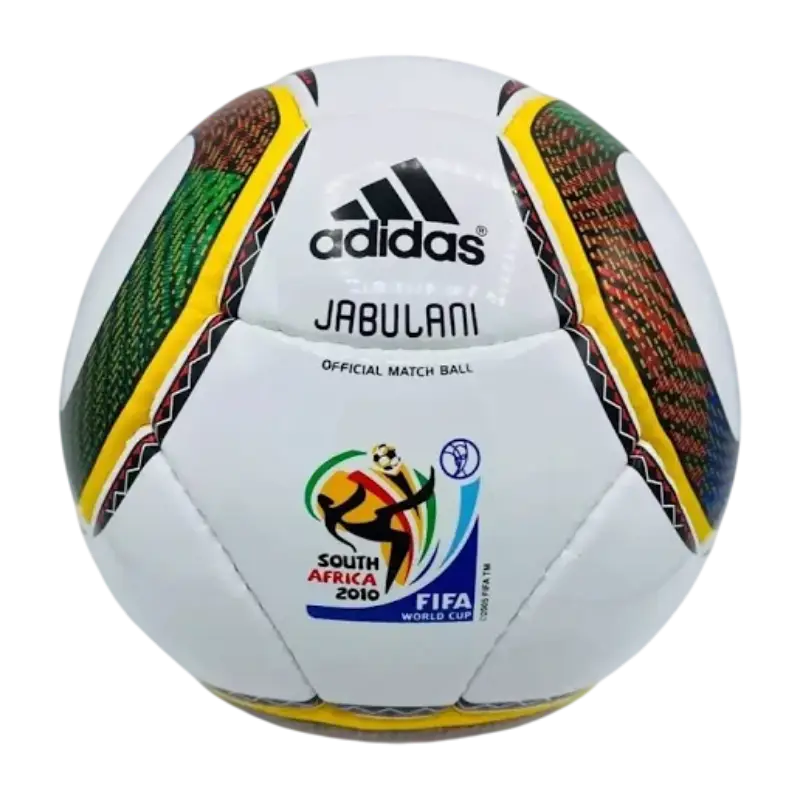
Launched for the 2010 tournament in South Africa, the Jabulani was designed with eight thermally bonded panels made from ethylene‑vinyl acetate (EVA) and thermoplastic polyurethane. The ball’s “Grip ’n’ Groove” surface was intended to improve aerodynamics. Yet players, particularly goalkeepers, found its flight erratic and difficult to predict, leading to widespread criticism. Although it introduced a bold new design and the name means “to celebrate” in Zulu, the Jabulani is remembered more for controversy than performance.
9. Tricolore (France 1998)
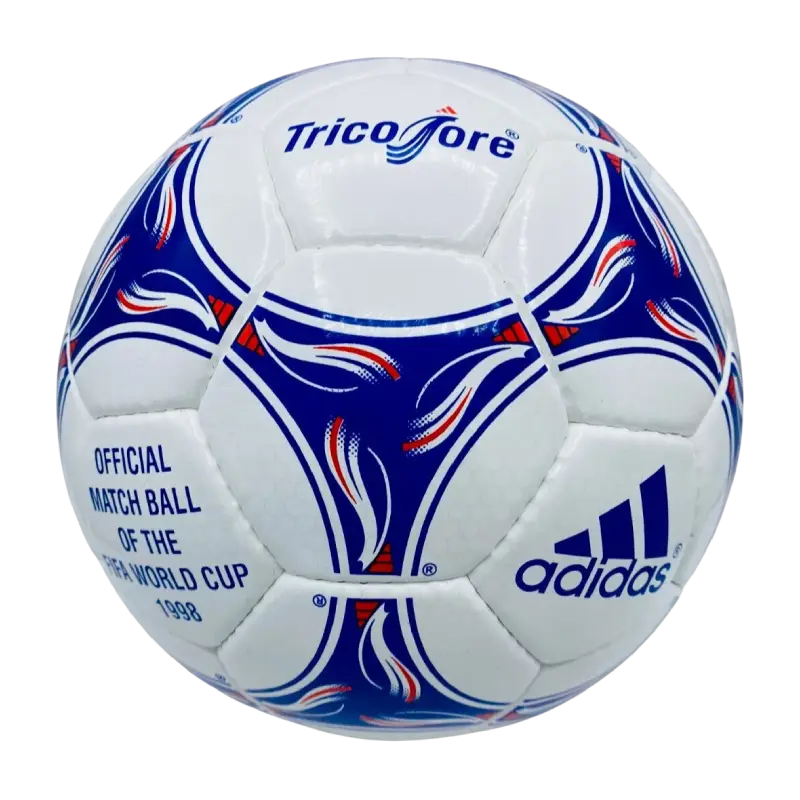
The Tricolore marked the first time a World Cup ball moved beyond the traditional black‑and‑white palette. Its red, white and blue graphics celebrated the French flag, while thousands of foam microcells inside made the ball light, strong and responsive. The Tricolore was also the last ball to use the iconic Tango pattern. Its vibrant colours and improved touch made it a fan favourite and a fitting farewell to an era of design.
8. Fevernova (Japan & South Korea 2002)
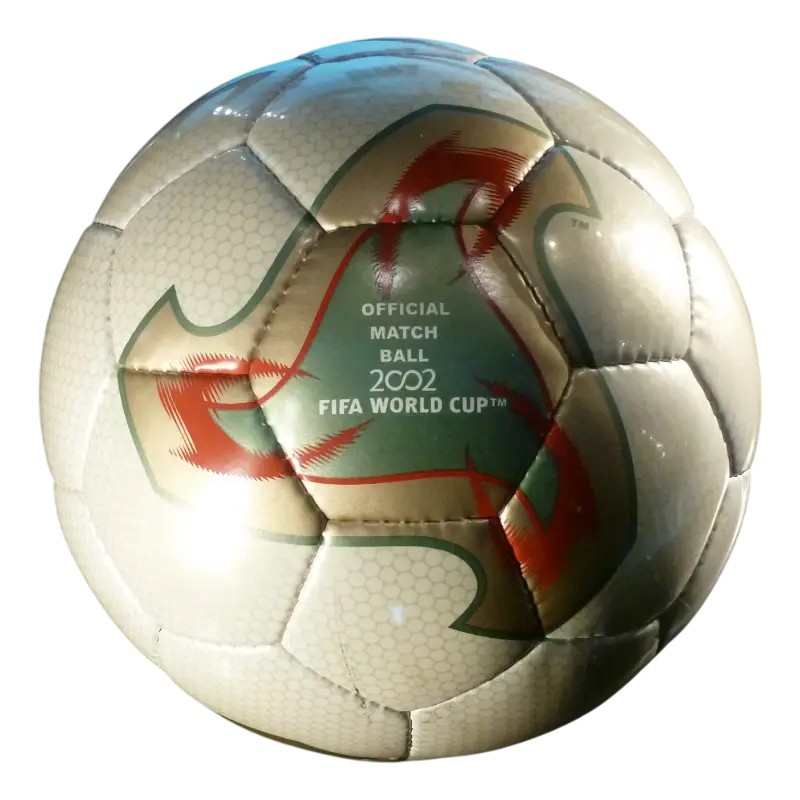
The Fevernova broke from the Tango design with bold graphics inspired by Japanese calligraphy and the tomoe symbol. It was constructed with eleven layers, including an advanced foam core and a three‑layer knitted chassis to deliver a more predictable flight path. The outer shell combined polyurethane and rubber for durability. Some players felt it was slightly too light, but its accuracy and distinctive look signaled a new direction in ball design.
7. Questra (United States 1994)
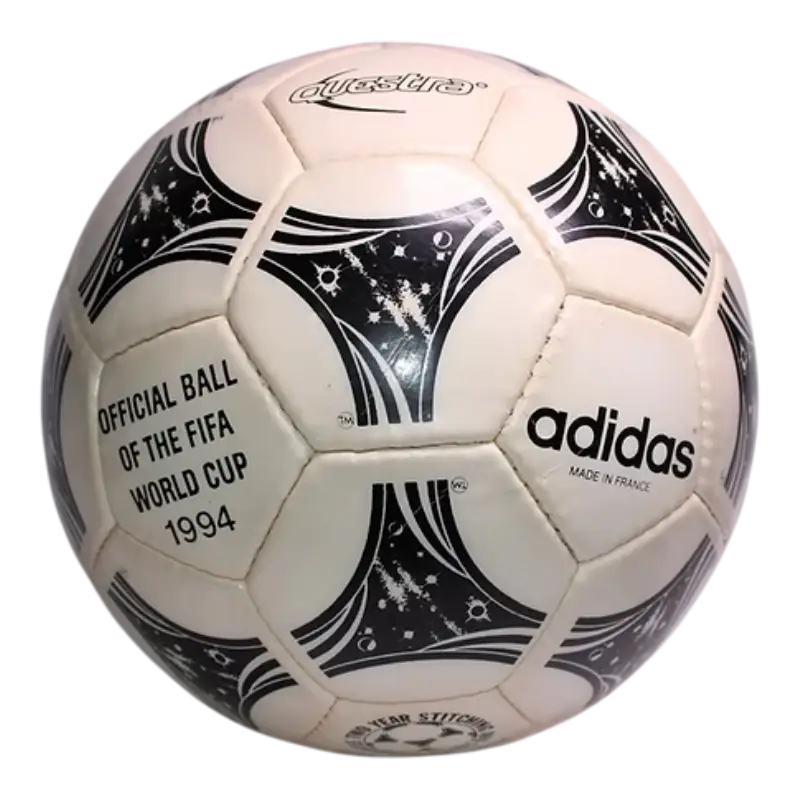
Named to honor the 25th anniversary of the Apollo 11 moon landing, the Questra used a blend of five materials wrapped in polystyrene foam. This construction made the ball more waterproof and softer on the foot while giving it greater acceleration. Space‑themed graphics and improved control helped it stand out, although some goalkeepers complained of unpredictable movement in humid conditions.
6. Etrusco Unico (Italy 1990)
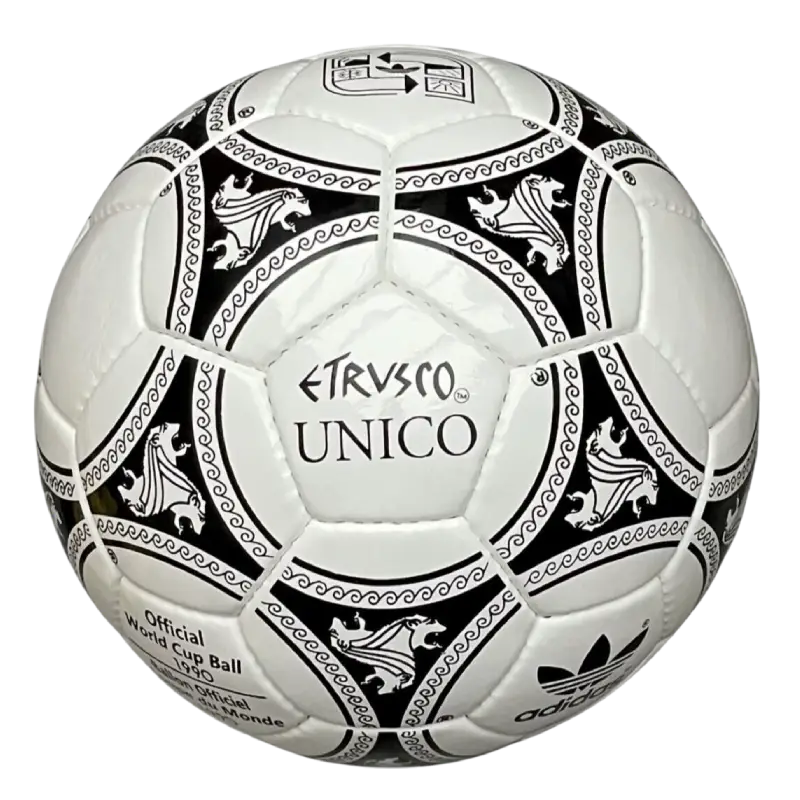
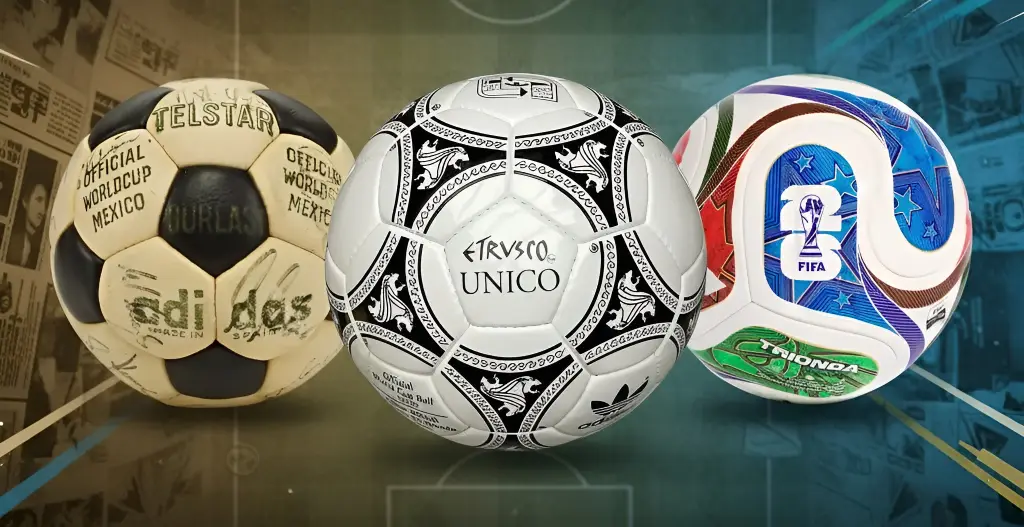
The Etrusco Unico drew inspiration from ancient Etruscan art, featuring three lion heads on each triad. It was the first World Cup ball to incorporate an internal layer of water‑repellent polyurethane foam, which improved cushioning and helped the ball maintain its shape in wet conditions. Released alongside a coordinated footwear and apparel line, the Etrusco balanced tradition with modern engineering.
5. Azteca (Mexico 1986)
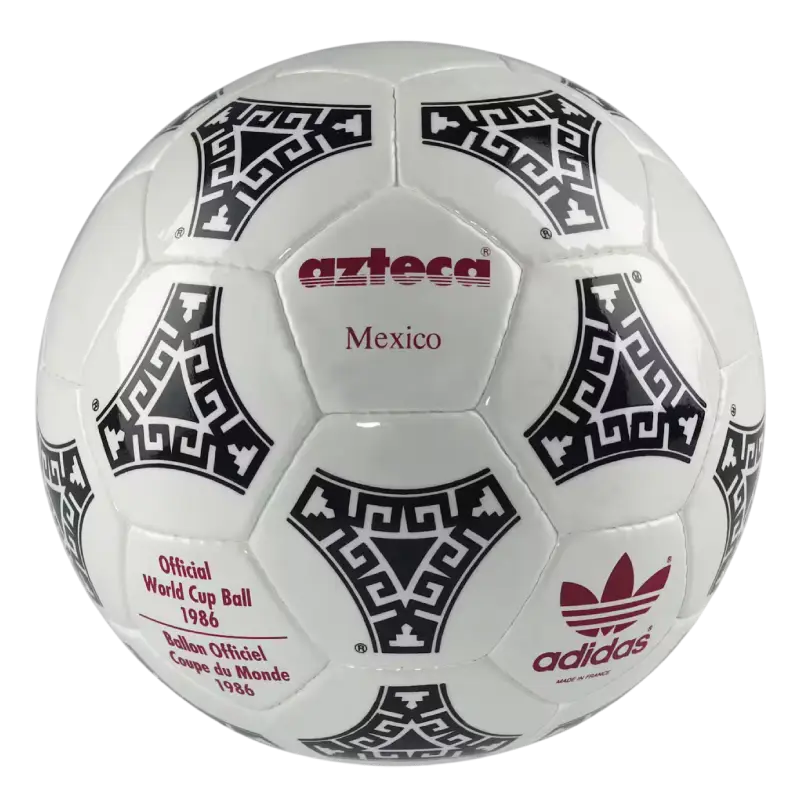
The Azteca was the first World Cup ball made entirely of synthetic materials. Its polyurethane exterior significantly reduced water absorption, ensuring consistent weight and performance even in wet weather. Hand‑painted graphics were inspired by Aztec temples, making it the first ball to reflect the culture of the host nation. This combination of durability and artistry set a new standard for match balls.
4. Telstar (Mexico 1970)
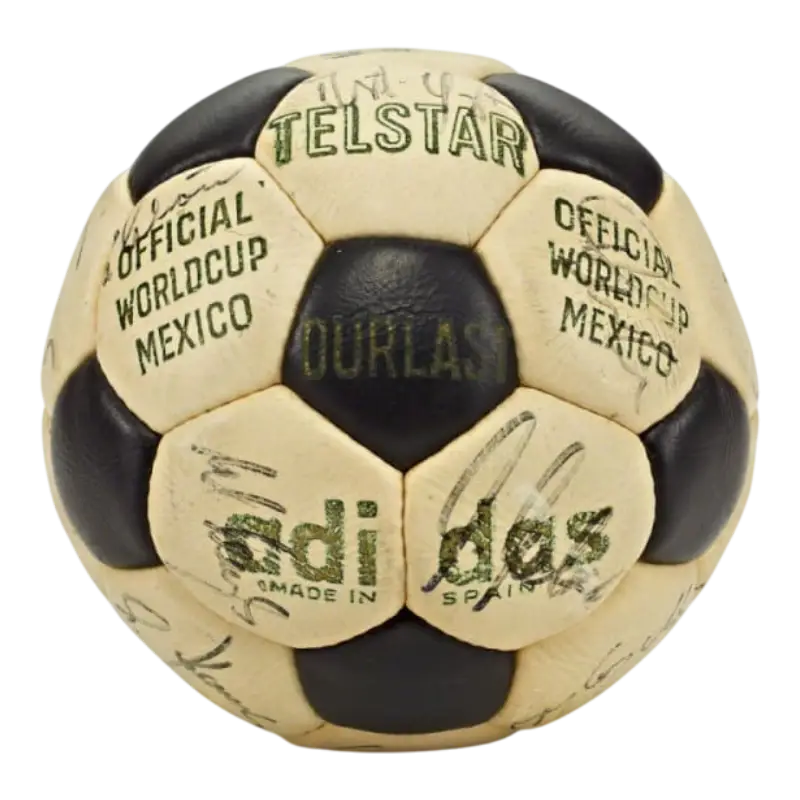
Introduced for the first global television broadcast of a World Cup, the Telstar used a 32‑panel truncated‑icosahedron design with black pentagons and white hexagons. The contrasting panels improved visibility on black‑and‑white TVs and distributed pressure evenly across the surface, leading to a more predictable flight. It established the blueprint for modern footballs and remains an enduring icon of the sport.
3. Teamgeist (Germany 2006)
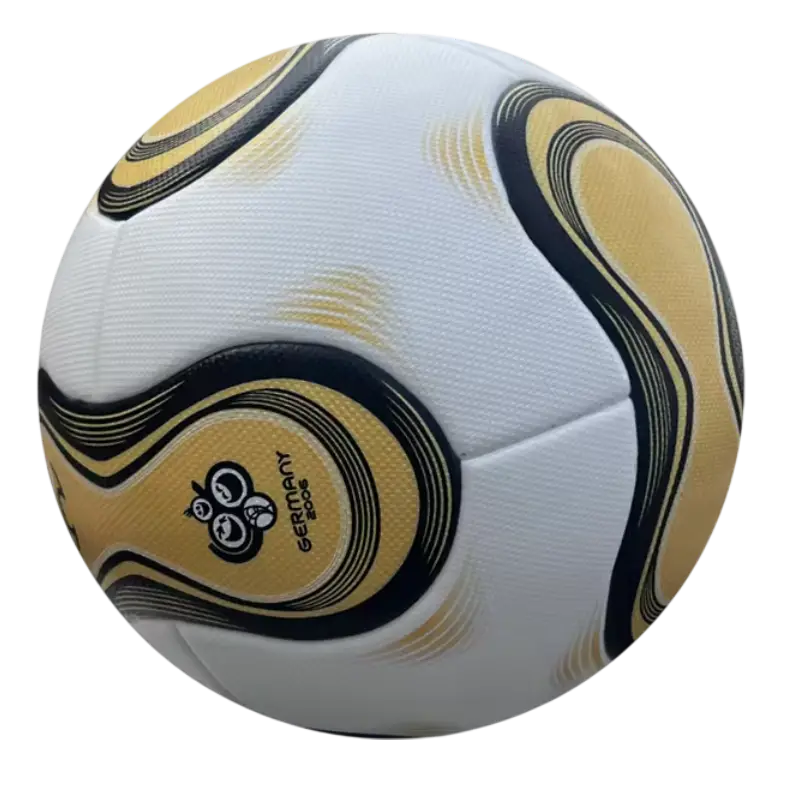
The Teamgeist revolutionised ball construction by replacing the traditional 32 stitched panels with 14 thermally bonded, curved panels. This near‑seamless sphere was rounder and offered uniform performance regardless of where it was struck. The ball was also nearly waterproof, maintaining its weight in rainy conditions. A special edition was created for the final, underscoring its influence on future designs.
2. Al Rihla (Qatar 2022)
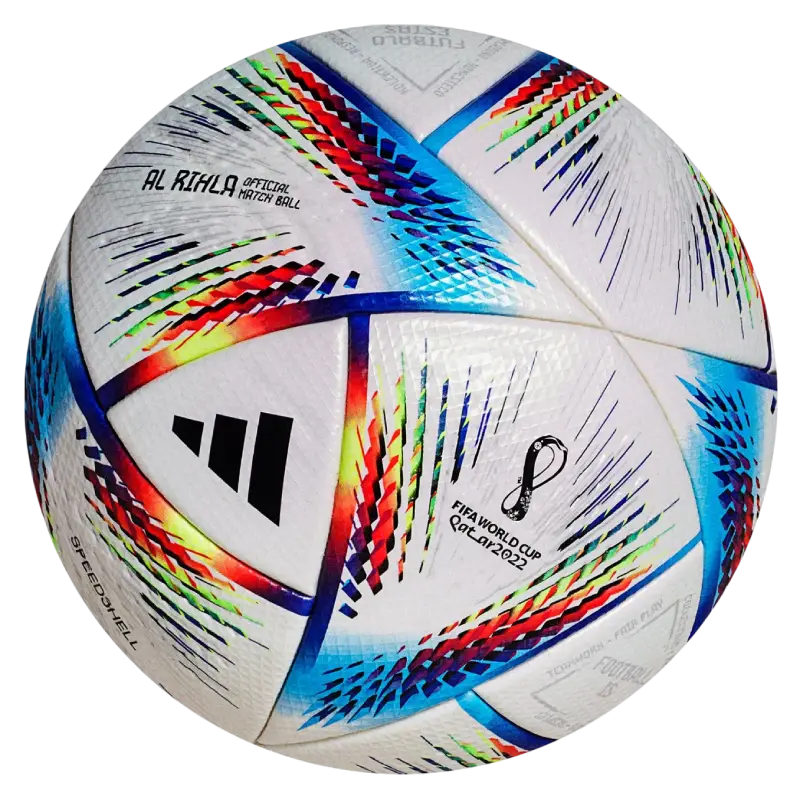
The Al Rihla, meaning “the journey” in Arabic, introduced a Speedshell surface made of twenty seamless, thermally bonded panels with macro‑ and micro‑textures to enhance stability and swerve. It also featured a suspended inertial‑measurement unit that provided precise movement data for VAR review. Designed using water‑based inks and inspired by Qatari architecture and culture, Al Rihla combined performance and sustainability, earning praise as one of the most accurate World Cup balls.
1. Brazuca (Brazil 2014)
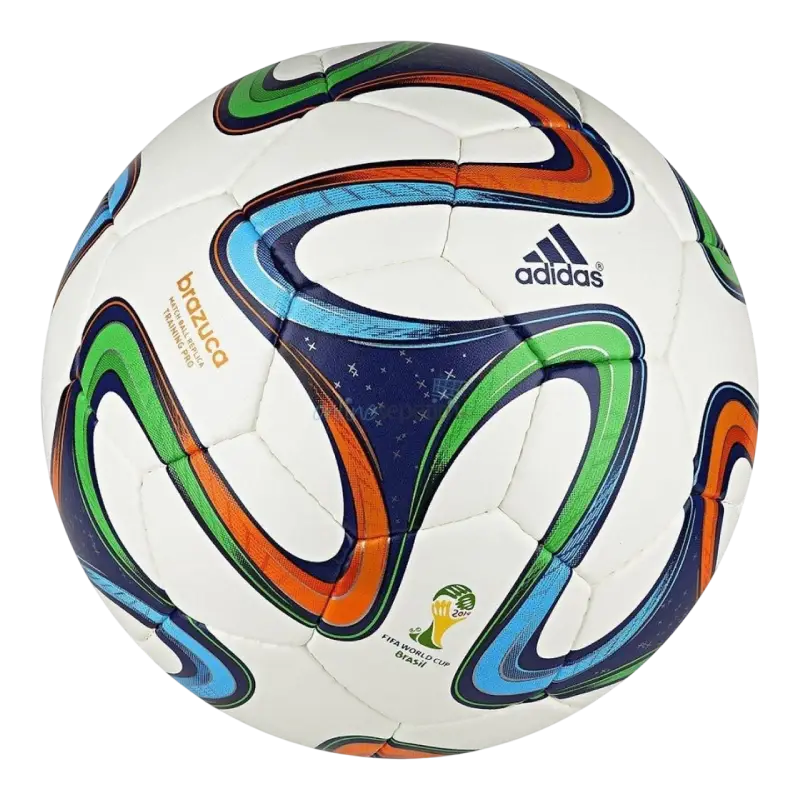
The Brazuca tops this list thanks to its balance of innovation, stability and cultural resonance. Its six thermally bonded polyurethane panels improved consistency and reduced water absorption to just 0.2 percent. The ball’s weight, circumference and rebound were carefully controlled, and its textured surface delivered excellent grip and aerodynamics. Colourful ribbon graphics paid homage to Brazilian wish bracelets, and players praised its reliable flight and comfortable touch. The Brazuca set a high benchmark for future match balls.
What’s next? The Trionda
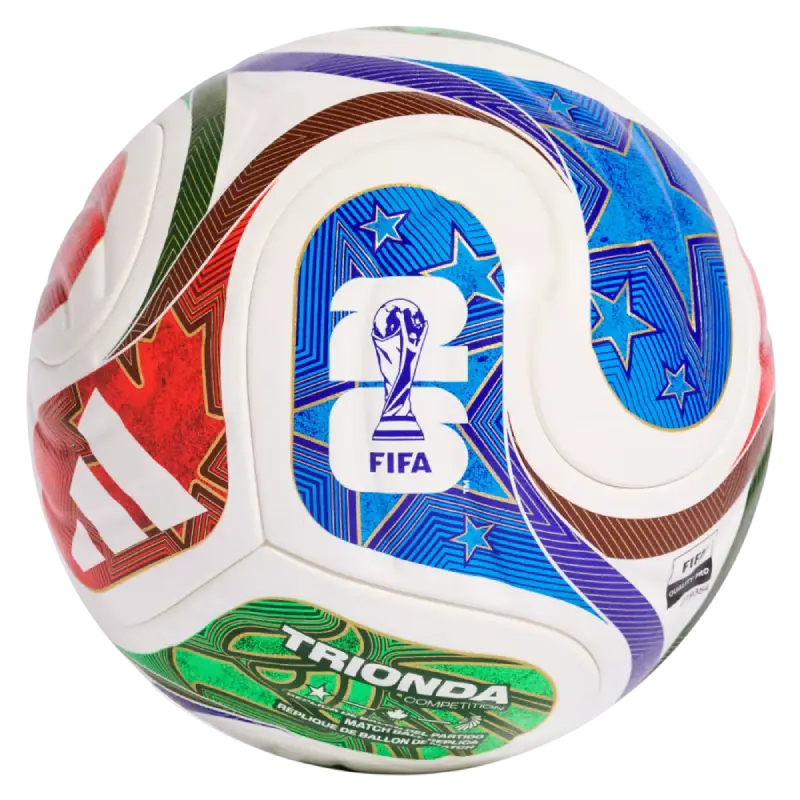
Set to debut at the 2026 tournament in Canada, Mexico and the United States, the Trionda is a fusion of “tri” (three) and “onda” (wave), reflecting the three host nations. Its four stitched polyurethane panels—the fewest ever used on a World Cup ball—are textured with deep seams and debossed patterns for enhanced stability and grip. A side‑mounted sensor will provide real‑time ball data to match officials. With a tricolour design celebrating each host’s national symbol, the Trionda promises to continue the legacy of innovation even though it has yet to be tested in competitive play. All eyes will be on it when it finally takes the pitch.